
Are Gender Roles in Marriage Okay as Long as There’s No Abuse?
Are gender roles in marriage okay if both partners are growth-oriented and genuinely kind-hearted?
Whenever I talk about “female submission” and “male leadership,” someone will respond with a variation of why gender roles are good for healthy marriages.
Gender roles or “biblical manhood and womanhood” is a belief that sees men as the God-ordained leaders at home, at church, and sometimes in society.
I was fully immersed in gender roles when I was getting married. I believed that men “lead” and women “submit.”
But even then I was invited to understand healthy deference.
Healthy Deference or Conditioning? My Wedding Tiff
At our wedding reception, a guest stood up to share some words of wisdom and present some gifts.
A few minutes into his speech, it occurred to me that we needed to move closer to the speaker so we could be in a better position to receive the gifts (in Kenya, at that time anyway, these would be physically handed over to the new couple).
I was in mid-stride when my husband asked where I was going.
“To receive the gifts,” I answered, surprised. Wasn’t it obvious we were standing too far away?
“Let’s wait,” he responded with a gentle new-groom smile. “He has not called us forward yet.”
No one saw the twitch on my face or the small tufts of smoke curling from my ears, but my husband may have noticed the flick of my chin and a stiffened back. I could not believe he had cut me down in front of all these people. Yes, “cut down in front of everyone” was how I felt.
I would “recover,” put my smile (and foot) back in place, and continue standing right where I was. But inside I was unhappy. In fact, I was kicking and screaming even though on the surface I was smiling and even perhaps feeling somewhat good about having done “the right thing” and “followed the man.”
My response revealed my conditioning to shut myself down rather than engage healthily and maturely.
Are Gender Roles in Marriage Okay as Long as There’s No Abuse?
This is one of the things that gender roles teach women: that it’s her job to follow, never the husband’s.
Gender roles teach women that forcing yourself to submit to any and every whim of his, even if he wouldn’t mind hearing your opinion and following it instead, gets you all the check marks.
Which leaves women and their husbands chasing fake, useless performances of submission instead of actually addressing real issues in a way that would help them both.
Our wedding tiff was really about communication. We simply had different opinions on where to stand while in front of a crowd, and we didn’t communicate well.
Instead of verbalizing what was on my mind, I just started moving, and I expected him to follow me. He, on the other hand, didn’t think we needed to move from where we were standing yet.
Instead of seeing the event as an invitation to learn better communication skills, I decided it was a case of me struggling to “obey” to my husband, which was the furthest thing from the truth.
And instead of addressing the actual issue, we moved along: I gave myself major points for “obeying my husband”, and he remained generally unaware of what was going on under the surface.
Gender Roles in Marriage: A Healthier Approach
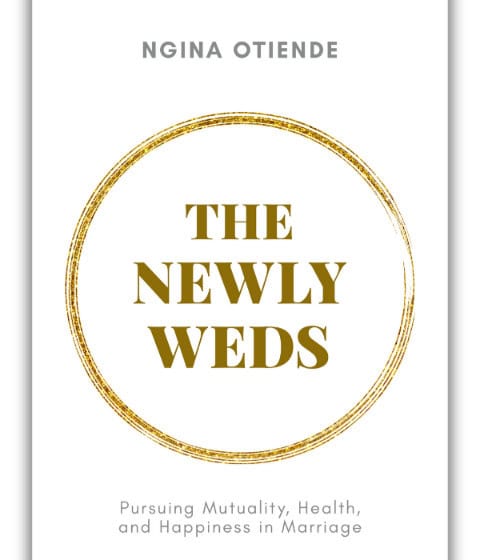
I share this story and others in my new book, The Newlyweds: Pursuing Mutuality, Health, and Happiness in Marriage about how traditional gender roles often torpedo growth in well-adjusting marriages.
We know that gender roles can exacerbate issues in abusive, betraying, and neglectful marriages. What isn’t talked about as often is how they interfere in marriages where both partners are willing but lack skills, knowledge, and awareness.
When we over-emphasize her deference, we ask her to diminish herself: we silence her voice, smother her energy, and suppress her purpose. At the same time, we are asking him to do something he wasn’t meant to do: to bear the entire weight of the marriage on his shoulders.
Gender roles are a faux fix; an escape from the reality of learning how to slow down, how to name and express feelings, how to regulate/co-regulate our nervous systems, think critically, reflect and repair rapture.
Instead of helping people build and strengthen healthy connections, gender roles hijack that process and then congratulate those who conform.
I believe we all deserve better. Married people should be equipped to address real issues instead of being encouraged to chase fake, useless performances.
“But my husband and I embrace gender roles, and we’re happy!”
Let’s talk couples who say they practice gender roles and are happy.
I love that some have caveats for abuse “Gender roles work if you’re both willing to do it God’s way.” (That view is still problematic because many individuals in abusive marriages often don’t recognize their situation as abuse.)
But like I share in my book, and according to research by Bare Marriage (The Great Sex Rescue), most couples who say they practice gender roles – she submits and he leads – don’t practice gender roles. They act more like partners.
So, if you “practice gender roles” and are happy in your marriage, I’m saying it is better to align your words to the reality of your lives. If you talk, plan, strategize, and problem-solve together, if you defer to each other and honor each other, if you generally work together as partners, your language ought to reflect that.
We can’t keep saying, “he’s the leader,” while you lead together and submit to each other. I talk about this and more in detail in my book, which you can pick up today. We can co-create a marriage without the baggage of harmful religious conditioning. (And The Newlyweds makes a great gift for friends and family, especially those who are dating, engaged, or newly married!)
What people are saying

